Ads space
Hurghada
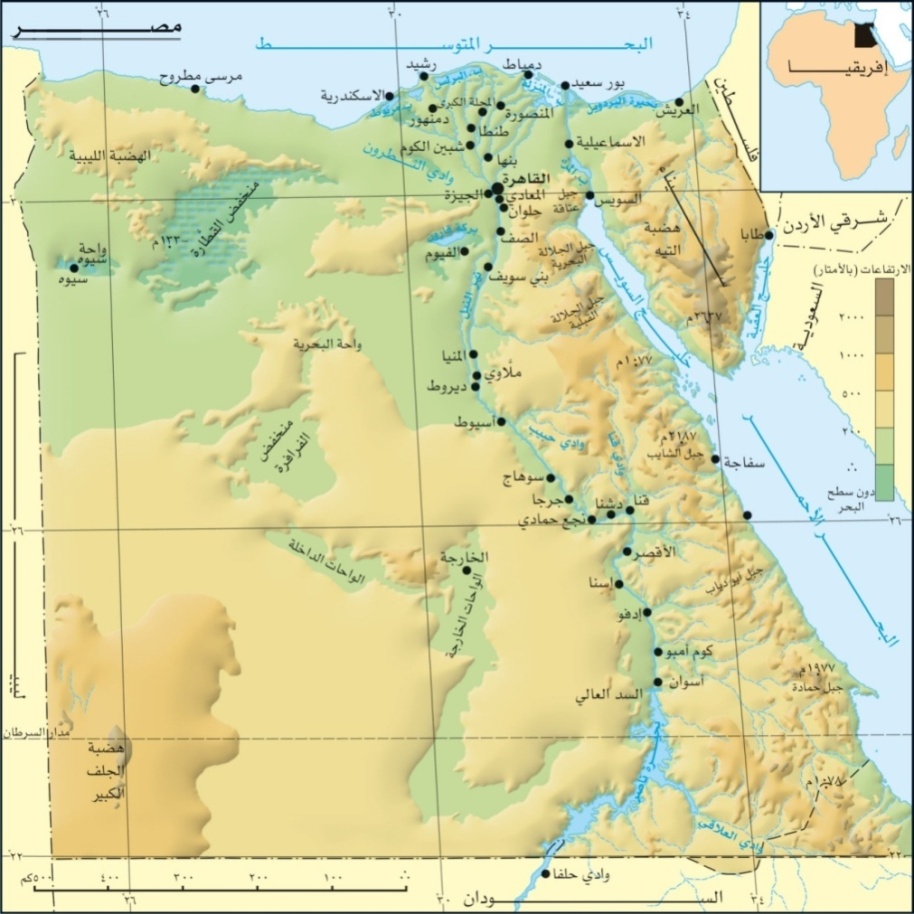
The administrative capital of the Red Sea Governorate, Hurghada occupies 40 km of the western coastline of the Red Sea. It is bordered to the north by Ras Gharib, to the south by Safaga, to the east by the Red Sea coast, and to the west by the Red Sea Mountains.
The islands of Giftun, Umm Qamar, Magawish, Abu Ramada, Abu Minqar, Fanadir, and Shadwan are located within its boundaries. Among its most famous resorts are El Gouna, Sahl Hasheesh, Soma Bay, and Makadi Bay. Its main districts are El Dahar, El Saqqala, and El Ahyaa. Hurghada boasts year-round sunshine, stunning coral reefs, and numerous attractions that draw tourists seeking relaxation and leisure. These attractions include its consistently mild temperatures, dry desert climate, and a wide array of beach activities, water sports, clubs, and golf courses.
The city’s appeal lies in its year-round climate. It also boasts numerous islands and marine sites that are a haven for diving and water sports enthusiasts, including Belinda Reef, Abu Qatra Reef, Abu Nuhas Reef, Umm Al-Ush Reef, Umm Qamar Reef, Al-Arouf Reef, Tawila Reef, Abu Naqad Reef, and the Soma Bay reefs.
Soma Bay: The Soma Bay resort, also known as Abu Soma Bay, was incorporated into the city of Hurghada in April 2015. Located 60 km north of Hurghada, the resort spans 13 million square meters, forming a stunning bay enveloped in pristine natural beauty.
The resort is self-sufficient, with urban planning, architecture, and a high standard of services that blend seamlessly with the surrounding area, offering a European touch in the form of hotels, villas, and sports, wellness, and leisure facilities owned by Egyptian and Arab businessmen. The resort includes three main properties: the Sheraton Hotel, the Residence des Casades, and the Robinson Club, in addition to a golf club.
Makadi Bay: Makadi Bay, or Makadi Cove, was incorporated into Hurghada in April 2015. Located 35 km south of Hurghada city center, the resort boasts year-round sunshine and expansive beaches of crystal-clear water and natural white sand. It’s one of Hurghada’s ideal resorts for holidays and cruises, with temperatures ranging from 15 to 23 degrees Celsius in the winter months and from 23 to 34 degrees Celsius in the spring and summer.
The resort is designed to cater to diverse tourist needs, featuring a collection of luxurious hotels, restaurants, and lounges offering world-class service and a selection of Asian, French, Italian, and Japanese cuisine.
Carlos Reef: Carlos Reef is one of Hurghada’s most beautiful diving spots, thanks to its dense coral reefs and diverse marine life, including rare hammerhead sharks, jackfish, tuna, barracuda, giant moray eels, and more. The reef is characterized by two coral towers that rise above the water’s surface. The valley between these two towers is approximately 16 meters deep, extending over 40 meters into the water, making it a suitable area for both novice and experienced divers.
Fanadir:
These are narrow, long, and tranquil reefs located north of Hurghada and accessible from El Gouna. They are suitable for all types of diving, including drift diving, scuba diving, and beginner diving. Divers prefer the eastern side of Fanadir because it is sheltered from the weather by a thin arc of coral reef. The shallow reefs are teeming with marine life, including pipefish, stonefish, scorpionfish, garfish, frogfish, guitarfish, flounder, hammerhead, tuna, and jackfish.
Sahl Hasheesh:
The Sahl Hasheesh resort covers an area of 32 million square meters and is managed by the Egyptian Resorts Company. The resort was planned in three phases: 6 million square meters for the first phase, 6 million square meters for the second, and 20 million square meters for the third. It currently includes 1,560 hotel rooms and 679 residential units, with an additional 6,000 hotel rooms and 6,000 residential units expected to open in future projects.
The resort also features an open-air theater renowned for hosting large concerts by leading Arab singers, attracting thousands of their fans.
El Gouna:
El Gouna was established in 1990 by Orascom Hotels and Development. It is a tourist resort located on a group of islands on the Red Sea coast, 22 km north of Hurghada International Airport and 470 km from Cairo. El Gouna is striving for food self-sufficiency by relying heavily on produce from its 120-acre farm, which supplies the resort with vegetables, fruits, meat, poultry, and fish without the use of pesticides.
The area is renowned for its scuba diving and various water sports. It boasts two main beaches, Zeytouna Beach and Mangrove Beach, and is crisscrossed by a network of waterways. The resort comprises six distinct districts: Marina Town, the Mediterranean District, the Golf District, the Nubian District, the Plateau District, and the Italian District.
Furthermore, all investments within the resort are geared towards utilizing clean solar energy, eliminating the need for government-generated electricity. This is achieved through the storage of solar-generated power in batteries. The resort is considered ideal for golf, diving, water skiing, surfing, and kitesurfing, and it also features numerous health clubs, five-star hotels, stunning natural scenery, and pleasant weather year-round.
Desert Breath: This is an artistic masterpiece built on March 7, 1997, in the El Gouna desert by the D.A.ST. Arteam, a group of three artists: sculptor Danae Stratou, industrial designer Alexandra Stratou, and architect Stella Constantinides. It consists of 89 conical sand dunes rising above the ground and 89 low, double-spiral sinkholes of varying sizes, all surrounding a 30-meter-diameter lagoon. This artwork covers an area of approximately 100,000 square meters.
Shadwan Island: Shadwan Island is the largest coral reef island in the Strait of Gubal and is also known as Shaker Island. Its northern section features a nearly vertical coral wall at a depth of over 40 meters, which divers can explore by drift diving with the gentle south-north current. These coral reefs teem with coral fish, fanfish, whitetip reef sharks, grey reef sharks, and hawksbill turtles, in addition to magnificent pods of dolphins.
Islamic Landmarks: Al-Mina Mosque. The Al-Mina Mosque was inaugurated in January 2012 during the Red Sea Governorate’s National Day celebrations. Built on an area of 4,000 square meters at a total cost of 20 million Egyptian pounds, it was constructed through the self-funded efforts of investors and citizens, with support from the Red Sea Governorate and the Ministry of Religious Endowments. The mosque is one of the largest in the governorate and boasts a unique architectural style, making it a potential tourist attraction. The surrounding area has been planned as a cultural plaza, and the boat and launch repair workshops that once existed around the mosque have been relocated to the floating dockyard in Safaga.
The city also houses the shrine of Abu al-Hasan al-Shadhili, one of the mosques built during the Ayyubid era in Egypt. The shrine consists of an octagonal building with one rectangular window on each side and another in the shape of a dome. The eighth side contains the shrine’s entrance.
Coptic Landmarks: The Monastery of St. Anthony. Hurghada boasts several famous Coptic landmarks, including the Monastery of St. Anthony, the first monastery established in the world. It is named after St. Anthony, whom Egyptian Copts consider the first monk in the world and the father of all monks.
The monastery dates back to the 4th century AD and is considered one of the most important and oldest archaeological monasteries in the world. It is located at the foot of Mount Galala, about 170 km south of Suez. It contains a collection of some of the rarest and most magnificent Coptic murals, as well as a large library housing 1,438 manuscripts and hundreds of printed books covering various fields of knowledge.
Hurghada also includes the Monastery of Saint Paul (or St. Paul’s Monastery), located in the Eastern Desert southeast of the Monastery of Saint Anthony. The road to the monastery begins approximately 25 km off the main Zaafarana Road and extends westward for 12.5 km.
The monastery contains four ancient churches: the ancient church where Saint Paul resided for 70 years; the Church of Abu Sefein, rebuilt by the master craftsman Al-Gohary in the late 8th century AD; the Church of the Archangel Michael, which has twelve domes, representing the twelve disciples of Jesus Christ, and dates back to 1777. In February 2014, a building dedicated to visitors of the monastery was inaugurated during the papacy of Pope Tawadros II. The city also includes the Cathedral of Saint Shenouda, located in the Al-Dahar district, covering approximately 860 square meters and built in 1926; the Church of the Virgin Mary and Archangel Michael, a modern-style church in El Gouna, north of Hurghada, with a capacity of 1,500 worshippers; the Monastery of Saint Mina, west of Hurghada, covering 1,500 square meters; and the Church of Saint Mark in the Al-Ahyaa district, covering 350 square meters.
Wadi Hammamat, also known as Wadi al-Yanabi’ or Umm al-Fawakhir, is a dry riverbed that became a winding road through the mountains of the Eastern Desert. Located 235 km from Hurghada, it served as a trade route in ancient times. The area is surrounded by quarries of basalt stone (known locally as “al-Bakhn”) and gold mines that were exploited from the Old Kingdom to the Roman era. The area’s tourist attractions include quarry markers on the northern side of the road, where the remains of ancient workers’ huts are visible. On the southern side of the road, hundreds of hieroglyphic tablets bear witness to the numerous expeditions and missions undertaken by the pharaohs to Wadi Hammamat.
Grand Aquarium The Grand Aquarium, or Marine Life Museum, is a museum showcasing marine life in Hurghada. Opened in January 2015, it displays a vast collection of marine creatures, allowing visitors to interact with and learn about them up close. It features over 22 of the largest aquariums in the world, including a 22-meter-long glass tunnel that provides a realistic underwater simulation for visitors.
The museum project was developed in three phases. The first phase opened with a capacity of over one million gallons of water, making it the seventh largest aquarium in the world. With the completion of the second phase, the capacity increased to 3.8 million gallons, making it the third largest. The final phase will see the aquarium become the largest in the world with a capacity of 8.8 million gallons. Experts from more than five countries, including England, Germany, Malaysia, and China, participated in the project’s development.