Ads space
Saint Catherine
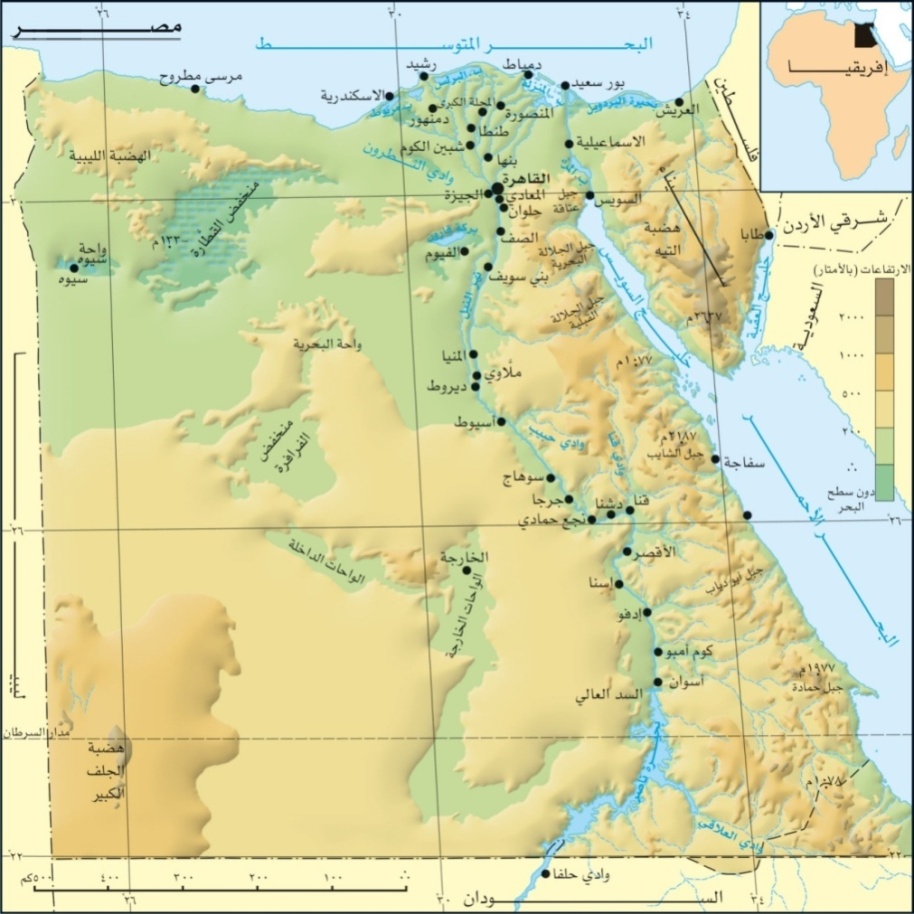
This is the most unique and distinctive city in Sinai. It is the highest inhabited place in Sinai, situated on a plateau 1,600 meters above sea level in the heart of South Sinai, 300 kilometers from the Suez Canal. It covers an area of 5,130 square kilometers and is surrounded by a group of mountains that are the highest in Sinai and in all of Egypt, including Mount Catherine, Mount Sinai (Mount Moses), and Mount Safsafa. This elevation gives it a unique climate: mild in summer and very cold in winter, which gives it a special beauty when snow blankets the mountain peaks and the city grounds. The area has been declared a nature reserve due to its natural, historical, and religious significance. Most of the city’s inhabitants work in agriculture, livestock herding, and tourism services. The city is famous for religious tourism, safari tours, and mountain climbing. It is home to Saint Catherine’s Monastery, Mount Sinai, the Tomb of the Prophet Aaron, and other religious sites. It is considered the largest nature reserve in the Arab Republic of Egypt in terms of area.
The Monastery of St. Catherine, also known as Mount Sinai, is located at the foot of Mount Horeb, mentioned in the Old Testament as the place where Moses received the Tablets of the Law. This site is also revered by Muslims, who call it Mount Moses. The area is sacred to the three Abrahamic religions: Judaism, Christianity, and Islam. Founded in the 6th century, the monastery is the oldest Christian monastery in the region that has retained its original function. The monastery attracts tourists from all over the world. It is headed by the abbot, the Bishop of Sinai, who is not subject to the authority of any patriarch or synod, but maintains close ties with the Patriarch of Jerusalem, hence his name is mentioned in the liturgies. The monks and priests of the monastery are Greek, not Arab or Egyptian, just like the bishops of the Greek Orthodox Church in Jerusalem, which has been under Greek control for centuries. The monks follow the rule of St. Basil the Great (329-379 AD), a disciple of St. Pachomius (290-348 AD), whereby monks dedicate themselves to a life of asceticism and worship, working alongside their fellow monks. In 2002, UNESCO designated the area a World Heritage Site.
Saint Catherine’s Monastery: The monastery is surrounded by a great wall that encloses several internal buildings, some stacked one on top of the other, sometimes reaching four stories high. These buildings are crisscrossed by winding passageways and corridors. The monastery’s construction resembles that of a medieval fortress. Its walls are built of granite and feature towers at the corners. The walls reach a height of between 12 and 15 meters. Construction of the monastery dates back to the 4th century AD when Empress Helena, mother of Emperor Constantine, ordered its construction in 432 AD. It was later completed during the reign of Emperor Justinian in 545 AD to serve as a stronghold for the monks of Sinai. In later centuries, it was known as Saint Catherine’s Monastery.
One of the most important buildings in the monastery is the Great Church, dating back to the reign of Emperor Justinian in the 6th century AD. Designed in the Roman basilica style, which was common at the time of its construction in 527 AD, it is located in the northern part of the monastery and is sometimes called the Great Church or the Cathedral. It is also known as the Church of the Transfiguration. Inside, there are two rows of twelve columns, representing the months of the year. On each side are four altars, each named after a saint. At the front of the church is a round apse, its ceiling and walls decorated with mosaics. Beneath it lies the sarcophagus containing the remains of Saint Catherine, housed in two silver caskets. The holiest place in the church is the altar of the tree, where it is believed that Moses stood when God appeared to him and spoke with him.
The remaining buildings of the monastery include the small church built atop Mount Sinai; the Chapel of the Dead, a chamber for storing the skulls of the deceased; the Chapel of the Burning Bush, located behind the main church of the monastery; and next to the Holy Burning Bush is the shrine of the Prophet Aaron. There is also the Mosque of al-Hakim bi-Amr Allah, a small mosque opposite the main church, built of mud bricks and granite during the Fatimid era, fulfilling the wishes of the vizier Abu al-Nasr Anushtakin in 500 AH/1106 CE. A manuscript in the monastery states that the mosque was built during the reign of al-Hakim bi-Amr Allah. The old mosque is located next to the main church. The library, rich in manuscripts, is located on the third floor of an old building south of the main church and contains rare manuscripts and a number of documents and decrees granted to the monastery by caliphs and rulers.
Saint Catherine Protectorate: The Saint Catherine Protectorate is located at the confluence of Wadi El-Esba’iya and Wadi El-Arba’een, on a high plateau surrounded by towering mountains of varying heights. These include Mount Saint Catherine, the highest peak in Egypt, Mount Sinai, Mount Safsafa, Mount El-Sana’a, Mount El-Banat, and Mount Abbas. These mountains are characterized by steep, undulating slopes that are difficult to climb without designated trails. The protectorate boasts a unique cultural heritage, embodied in Saint Catherine’s Monastery with its architectural features, artistic treasures, and archaeological artifacts, as well as the surrounding sacred mountains of religious significance, and other religious sites such as the tombs of the Prophets Saleh and Aaron.
The area was declared a nature reserve in 1988 and covers approximately 4,300 square kilometers. It is considered one of the most important natural havens for most of the rare plants native to Sinai, including olive trees, sedges, wild thyme, wormwood, wild asparagus, wild thyme, tamarisk, and wild thorn. It also boasts abundant fruit-bearing crops and historically significant springs and wells, such as the Olive Well and Aaron’s Well. The reserve is rich in diverse wildlife, including foxes, hyenas, ibex, gazelles, ibex, wild rabbits, wolves, Arabian hedgehogs, spiny mice, jerboas, and reptiles like the sandgrouse. It also supports a wide variety of birds, most notably storks, vultures, falcons, eagles, kestrels, sandgrouse, crested sandgrouse, turtle doves, Butler’s owls, larks, wheatears, sunbirds, ravens, sparrowhawks, larks, and buntings.
The city boasts stunning natural scenery, including mountains and valleys, making walking through them a delight. This has led to the popularity of safari tours for nature lovers.
Among the most famous mountains in the region are Jabal al-Banat (Mount of the Maidens), a majestic mountain near Sirial, separated from it by Wadi Feiran; and Mount Sinai (Mount Moses), rising to approximately 7,363 feet above sea level. It is named after the Prophet Moses (peace be upon him), who ascended the mountain for forty days, communing with God and receiving the divine message. A small church and a small mosque stand atop its summit. Mount Saint Catherine, one of the highest mountains in Egypt, reaches an altitude of 8,563 feet above sea level. It is named as such because, according to monastic tradition, angels carried the body of Saint Catherine from the site of her martyrdom in Alexandria in 307 AD to this mountain. Today, only her skull and one hand bone remain, preserved in two reliquaries within the church. From the summit, one can see the Gulf of Aqaba and the Gulf of Suez in the distance.