Ads space
Wadi El Natrun
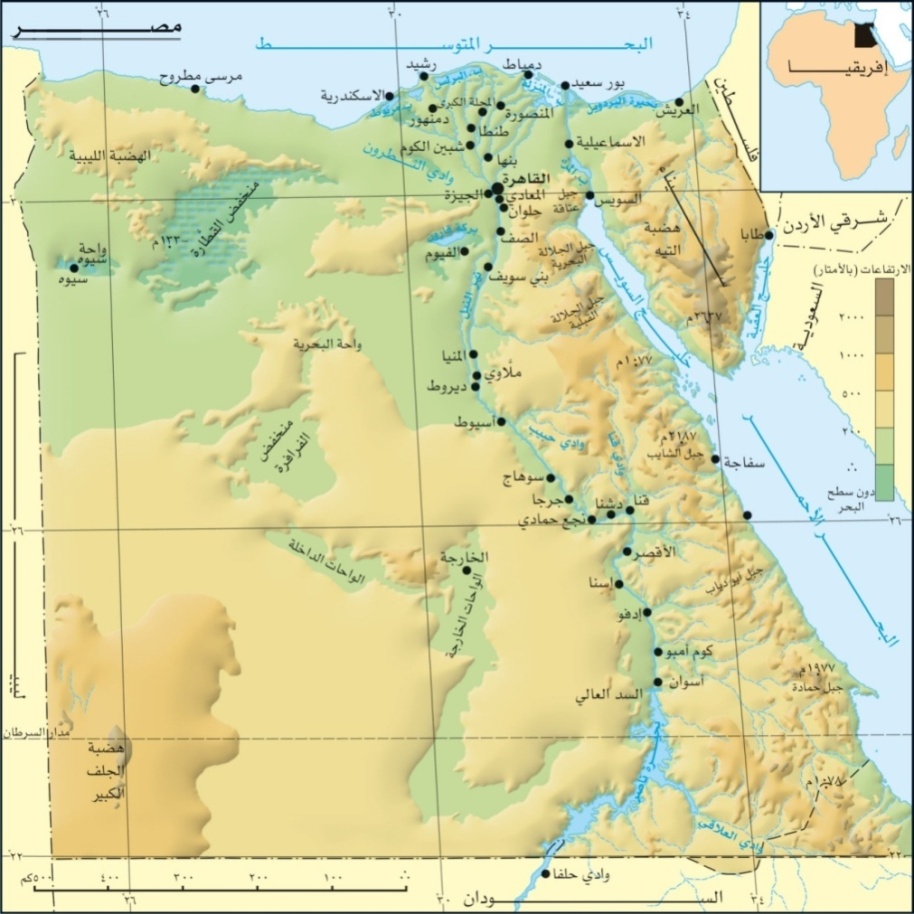
This is the common name for a desert depression located west of the Nile Delta, along the Tahrir Directorate. It lies approximately 10 km west of the entrance to Sadat City on the Cairo-Alexandria Desert Road, and about 50 km from Khatatba on the Nile River (Rosetta Branch). It is about 50 meters below the level of the surrounding plateau. The depression varies in length from 5 to 60 km, with an average width of 10 km, and its deepest point reaches 24 meters below sea level.
The depression is the smallest in the Western Desert of Egypt, covering an area of approximately 500 km². Therefore, it is more accurately described as a depression, not a valley. The area is a closed depression with a defined beginning and end, and no source, mouth, or tributaries. Thus, calling the depression a valley is topographically inaccurate.
The depression lies on a northwest-southeast axis, roughly midway along the Cairo-Alexandria Desert Road. Its northwestern edge is about 85 km from Alexandria, while its southeastern edge is about 80 km from Cairo.
The bottom of the Wadi El Natrun Depression is dotted with between 16 and 20 lakes, 12 of which are large and clearly visible, with a depth not exceeding 2 meters. Their combined area is approximately 10 square kilometers. The water in most of these lakes has a slightly reddish hue due to its saturation with natron salt.
Wadi El Natrun city is the capital of the Wadi El Natrun district.
The district comprises three rural units, including four main villages and one administrative unit, in addition to 37 smaller villages, hamlets, and small settlements. The rural local units are: – El Jaar – El Hamra – Bani Salama – Kafr Dawoud
The Wadi El Natrun region is generally characterized by its abundance of natural and historical tourist attractions. The natural attractions include salt lakes interspersed with sulfurous mineral springs and sandy beaches on both the east and west sides, some of which are suitable for cultivation, such as the “Al-Hamra Spring,” which is used for therapeutic tourism. Other lakes include Lake Al-Jaar, the Al-Raizounia Saltworks, and other salt pans from which salt is extracted in abundance.
The historical aspect of tourism is primarily religious, represented by the four Coptic Orthodox monasteries located there: the Monastery of Saint Macarius, the Monastery of Saint Bishoy, the Monastery of Al-Baramous, and the Monastery of the Syrians. These monasteries are easily accessible and can be visited at any time, except for the Monastery of Saint Macarius, which requires a special permit.
According to the official statistics of tourist attractions in the Beheira Governorate in 1995, Wadi El Natrun received only 10,000 tourists.
Nab’a al-Hamra Lake: Also known as Lake Ayoub, this lake is located in the heart of the Wadi El Natrun desert and covers an area of approximately 300 acres. Nab’a al-Hamra Lake is highly saline, yet a spring of exceptionally fresh water flows from its center, believed to have healing properties for certain skin diseases. This has led some officials to include it in the Beheira Governorate’s medical tourism plan. The government had planned to develop the land surrounding the lake to establish tourist and recreational facilities to serve this purpose.
Monastery of Saint Macarius: This monastery is attributed to Saint Macarius the Great, a disciple of Saint Anthony the Great, the founder of Christian monasticism. Macarius the Great became a monk and secluded himself in the Wadi El Natrun desert. He likely began constructing his hermitage in the last third of the 4th century AD. The monastery covers a total area of approximately 11.34 km² and contains seven churches: three within the monastery grounds and four atop the monastery’s fortress. There are also monks’ cells, as well as a refectory attached to a kitchen. The monastery also includes a small museum, a hospital, a power station, a printing press, and a library containing rare manuscripts. There are also residences for non-monastic staff. Visits require prior authorization, except during Coptic Orthodox fasting periods.
Monastery of Saint Bishoy: This is the largest of the four active monasteries. It is attributed to Saint Bishoy, a disciple of Saint Macarius the Great, who founded it with a group of monks in the late 4th century AD. It covers approximately two acres and includes five churches, the largest being the Church of Saint Bishoy, the largest church in Wadi El Natrun. In addition, there is a guesthouse, a large garden, a library, the ancient refectory, the Well of the Martyrs, and numerous monks’ cells.
Monastery of the Virgin Mary – Syrians: This is the smallest monastery in the Wadi El Natrun region. Its archaeological site covers approximately one feddan and 13 kirats. Located between the Monastery of Saint Macarius and the Monastery of Paromeos, it was founded by Syrian monks in the 6th century AD. The monastery contains four churches, a fortress, a guesthouse, monks’ cells, and a refectory, similar to other monasteries in the region. It is renowned for the original cell where Saint Bishoy used to retreat.
The Monastery of the Virgin Mary – Paromeos: This monastery is attributed to the Virgin Mary and the Romans Maximus and Domadius; the name Paromeos means “belonging to the Romans.” It was founded in the 6th century AD. The monastery occupies 880 feddans in the far north of Wadi El Natrun, about 12 km from the Rest House on the Cairo-Alexandria Desert Road. It includes five ancient churches, a library containing hundreds of manuscripts in various languages, a fortress, a guesthouse, a bakery, and several storerooms.