Ads space
Ras El Bar
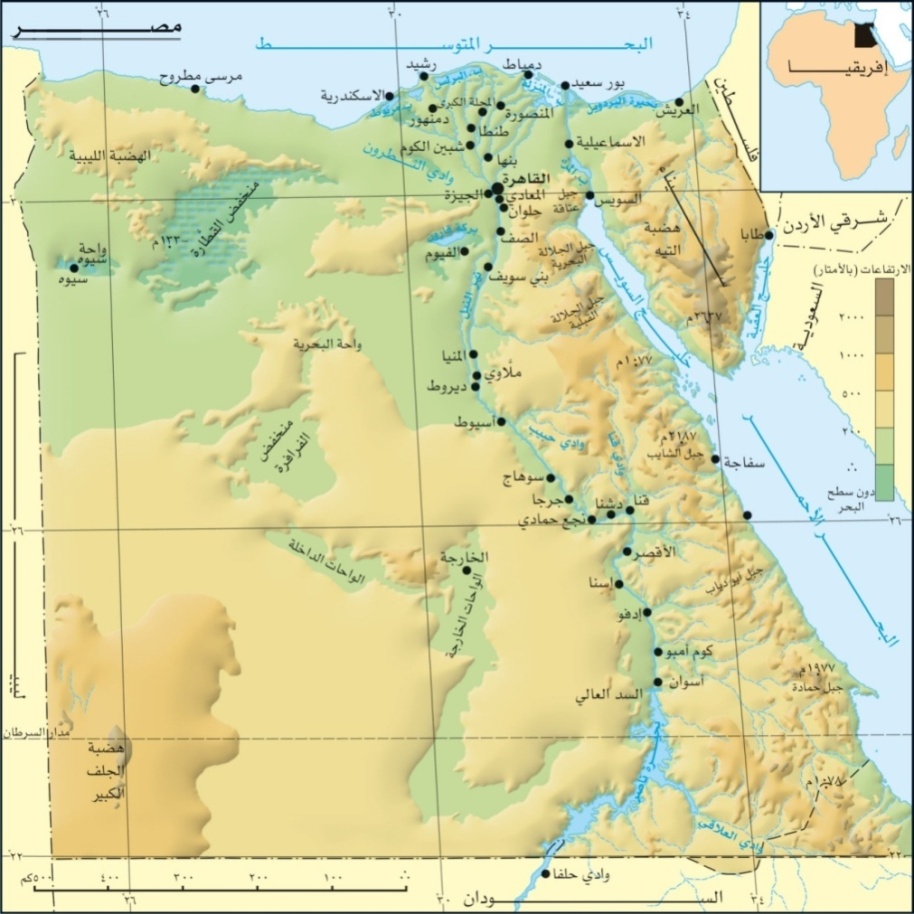
Since the founding of Damietta, Ras El Bar has been a suburb of the city. Sometimes fishermen and quail hunters would come and set up their huts there, and at other times guards and soldiers would establish their barracks. Damietta residents would also come by boat for leisure, fishing, and recreation.
Ras El Bar… a modern name. In the Middle Ages, the Arabs called this area “Jiza Damietta,” and “Jiza” means the region or the place to which one passes. When Al-Maqrizi visited it in the fifteenth century, he called it “Marj Al-Bahrayn” (the meeting place of the two seas) in his poem. Ras El Bar then witnessed terrible events during the Crusades. In 1169, while Saladin was still vizier to the Fatimid Caliph Al-Adid, the Crusader fleets arrived on the coast of Damietta in about a thousand ships carrying tens of thousands of knights and infantry. They landed at Ras El Bar and besieged the city of Damietta for fifty-three days. Saladin fought them until he drove them out of Damietta after sinking most of their ships in the Mediterranean Sea. In June 1218, a huge fleet arrived off Ras El Bar carrying about seventy thousand fighters under the command of John of Brienne. They landed on Damietta Island and camped in front of the city for six months and twenty-two days, entering it in November 1219. Then the story ends with the departure The invaders departed from Damietta after spending three years and four months there and on its shores.
Thirty years later, in June 1249, a large fleet carrying Louis IX and his army anchored off Ras El Bar. They landed at Ras El Bar, marched to Damietta, crossed the bridge, and captured it without a fight. The story ends with their defeat at the Battle of Fariskur, the capture of Louis IX, and the withdrawal of the expedition from the coasts of Ras El Bar and Damietta in May 1250 AD.
The wheel of time turns, and the history of the resort begins at the start of the nineteenth century. The horrors of the invasions and wars that swept through that beautiful region have been forgotten. Peace and relaxation have returned, and the sea’s waves have washed away the traces of battles and bloodshed. Fishermen and quail hunters returned with their boats and nets, frequenting those shores in groups and individually.
In Damietta, after celebrating the Mawlid of Abu al-Ma’ati on the night of the 15th of Sha’ban, the Mawlid of Sheikh Ali al-Sayyad on the west bank of the Nile, and the Mawlid of Sheikh Sadid in al-Sinaniyah, the Sufi sheikhs and their followers would proceed north along the Nile to a place known as al-Jarbi.
In the 19th century, some prominent figures from Damietta settled in Ras al-Bar in 1823 for hunting and recreation. They were captivated by its atmosphere and scenery and built huts from palm fronds and mats. They soon made this place their summer resort, and others followed suit. The resort developed year after year, gradually growing from a few scattered huts to organized rows of dwellings between the Nile and the sea.
In 1883, the German scientist Koch, commissioned by the Egyptian government following a cholera outbreak in Egypt, visited Ras El Bar and wrote in his report, “Ras El Bar may one day become the king of resorts and the most famous.” He noted its beautiful location, clean, dry air, golden beaches, and tranquility, as well as its lower humidity compared to other Egyptian beaches and the high iodine content of its air.
Ras El Bar was initially a favorite among the aristocracy, but it gradually became popular with the general public. One consequence of World War I (1914-1918) was that many members of the Egyptian aristocracy were unable to travel abroad, leading to a surge in demand for Ras El Bar. A similar phenomenon occurred during World War II, resulting in numerous improvements to the resort and a significant boost to its economy.
At the beginning of the 20th century, Ras El Bar resort witnessed various projects of varying importance aimed at developing and improving the resort. In 1912, the doors and windows of the huts were made of wood, replacing the previous method of using sacks that opened and closed by pulling a rope.
Between 1919 and 1929, the resort administration focused on repairing the agricultural road leading to Ras El Bar from the east. Previously, the only access route was via the Nile and boats.
In 1930, the Damietta Bridge was opened, connecting the two banks of the Nile and facilitating access to the resort by car.
In 1938, the Ports and Lighthouses Authority constructed a 350-meter-long reinforced concrete pier extending into the sea and 75 meters above the sand on land. This pier was built to protect the northern coast from the continuous erosion caused by what is known as the “tongue.”
In 1944, a new urban development plan was proposed for Ras El Bar, envisioning it as a permanent city. Supporters of this idea argued that the simple, natural, and tranquil lifestyle of the resort was no longer compatible with the demands of the modern age or the rapid pace of urban development. They also maintained that the traditional way of life enjoyed by the older generation was no longer suitable for the fifty thousand visitors of diverse backgrounds and temperaments.
The resort’s popularity increased year after year following these developments, reaching forty-five thousand visitors in the summer of 1949.
In 1950, new roads were built in the resort, wide in length and width, and special vehicles were established to facilitate transportation, known as “the train,” and the sewage project was implemented, the western road was paved, and a new drinking water network was extended to the southern area of the resort. This helped to expand the area of the resort. From here, it was necessary to continue developing this distinguished resort and bringing it to a prestigious tourist level worthy of its unique location. This is what happened in the Mubarak project for development and urban coordination, which contributed to the reformulation and coordination of Ras El Bar Island.