Ads space
Alexandria
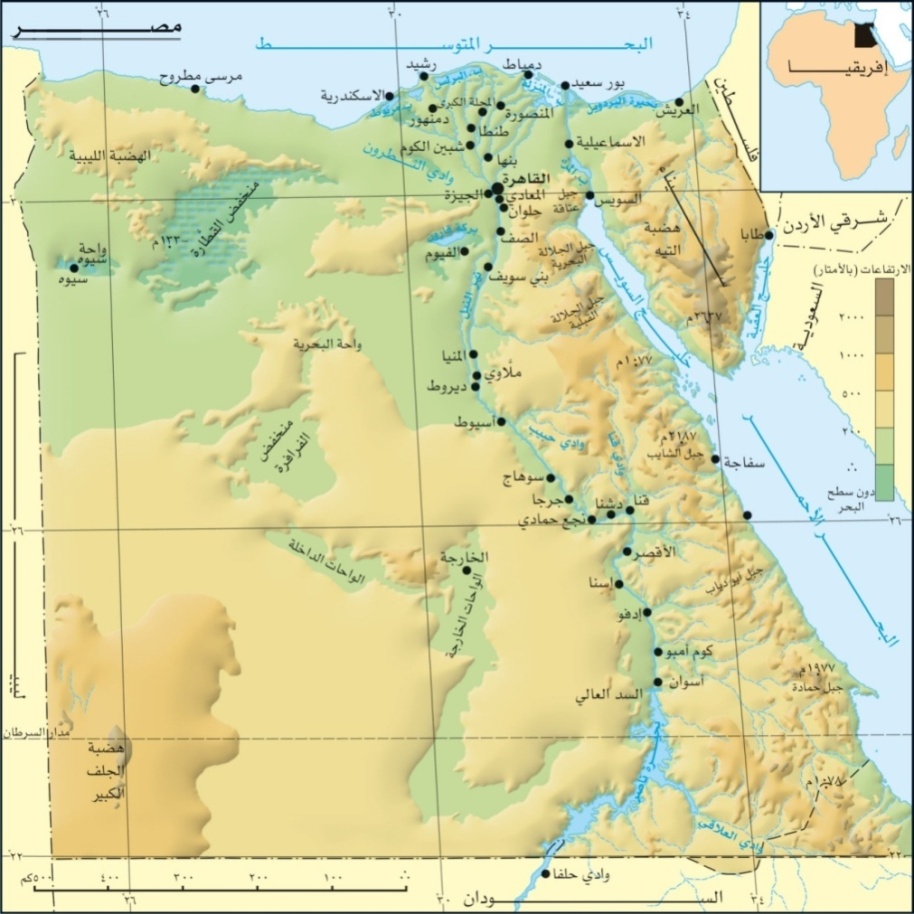
Considered the second capital of Egypt and its ancient capital, Alexandria is the capital and largest city of the Alexandria Governorate. It lies on the Mediterranean coast, stretching approximately 55 km northwest of the Nile Delta. It is bordered to the north by the Mediterranean Sea, to the south by Lake Mariout up to kilometer 71 on the Cairo-Alexandria Desert Road, to the east by Abu Qir Bay and the city of Edko, and to the west by the Sidi Kerir area up to kilometer 36.30 on the Alexandria-Matrouh Highway.
Therapeutic Tourism in the Salt Mines of Borg El Arab:
The salt mines of Borg El Arab are characterized by the presence of plateaus to the north and south, which act as a natural barrier against winds and sandstorms. The area’s air is also free of pollution and suspended particles that scatter sunlight. Additionally, there are bay-like basins (calm waters) with no waves, creating a mirror-like effect. The sun’s rays are reflected to the Earth’s surface, in addition to a very high salinity, up to seven times that of the water in Safaga Bay. The buoyancy and gravitational forces reduce the effect of gravity, leading to a tangible improvement in blood circulation within the body. This increases the amount of blood reaching the skin, thus creating a balance between the amount of salts inside and outside the body. This balance has a significant impact on the speed of healing psoriasis. In addition to all this, the area boasts stunning natural beauty and a prime location that promotes patient relaxation and improves their psychological well-being.
The salt flats are of natural origin, specifically seawater. The waters of the Burj Al Arab salt flats are characterized by specific environmental conditions related to the construction, design, and organization of the concentration, crystallization, and drainage basins. The concentration can be controlled through dilution or further refinement. This is a key advantage of the water in the Burj Al Arab salt flats when used for psoriasis treatment, as it allows for achieving the desired concentration within a specific timeframe. Furthermore, the Burj Al Arab salt flats are distinguished by the presence of plateaus to the north and south, which act as natural barriers against winds and sandstorms. The area’s atmosphere is also free of pollution and suspended impurities that scatter sunlight. There are also bay-like basins (calm waters) without waves, which act as mirrors, reflecting sunlight to the earth’s surface. The salinity is exceptionally high, up to seven times that of the water in Safaga Bay, resulting in easy buoyancy and reduced gravitational forces. This leads to a noticeable improvement in blood circulation throughout the body, thus increasing the amount of blood reaching the skin. This leads to a balance between the amount of salts inside and outside the body, and this balance has a significant impact on the speed of psoriasis healing. In addition, the area boasts stunning natural beauty and a prime location that promotes patient relaxation and improves their psychological well-being.
These advantages of the Burj Al Arab salt flats make them a strong competitor to the Dead Sea region, which has significant drawbacks for natural psoriasis treatment. These drawbacks include the lack of sunlight during autumn and winter, the Dead Sea’s elevation of 390 meters below sea level (making it unsuitable for heart patients), and the high levels of bromine, which can trigger skin allergies. Therefore, the environmental conditions and salt concentration of the Burj Al Arab salt flats can be utilized to treat psoriasis patients, positioning the Burj Al Arab region on the map of therapeutic tourism.
As for the method of operating the Burj Al Arab saltworks, this is done by feeding the concentration basins, which start from the city of Al Hammam, with seawater through a pipeline extending into the sea for a length of 250 meters. This pipeline ends with two branch pipes, each 5 meters long, through which seawater is drawn. The two pipes empty into a well where the seawater is clarified in the well to get rid of impurities, sand, fish and marine organisms. Then this water is drawn into the main pipe which pours the purified seawater into the concentration basins. The area of the first concentration basin is 6 km long by 1.8 km wide, and in this basin carbonate salts are deposited. Water is transferred from the first concentration basin to the second concentration basin via two gates and is left to concentrate. In this basin, gypsum salts are precipitated. The solution is then transferred from the second concentration lake to crystallize so that sodium chloride can be precipitated by solar evaporation. The number of sedimentation basins in the Burj Al Arab saltworks is 5 basins, four of which have an area of 70 meters wide by 1200 meters long, while the fifth has a length of 1000 meters and a width of 700 meters. The salt is precipitated at a concentration of 26 Baumé to 28 Baumé. This is the complete method of operating the Burj Al Arab saltworks.Alexandria:
Considered the second capital of Egypt and its ancient capital, Alexandria is the capital and largest city of the Alexandria Governorate. It lies on the Mediterranean coast, stretching approximately 55 km northwest of the Nile Delta. It is bordered to the north by the Mediterranean Sea, to the south by Lake Mariout up to kilometer 71 on the Cairo-Alexandria Desert Road, to the east by Abu Qir Bay and the city of Edko, and to the west by the Sidi Kerir area up to kilometer 36.30 on the Alexandria-Matrouh Highway.
Therapeutic Tourism in the Salt Mines of Borg El Arab:
The salt mines of Borg El Arab are characterized by the presence of plateaus to the north and south, which act as a natural barrier against winds and sandstorms. The area’s air is also free of pollution and suspended particles that scatter sunlight. Additionally, there are bay-like basins (calm waters) with no waves, creating a mirror-like effect. The sun’s rays are reflected to the Earth’s surface, in addition to a very high salinity, up to seven times that of the water in Safaga Bay. The buoyancy and gravitational forces reduce the effect of gravity, leading to a tangible improvement in blood circulation within the body. This increases the amount of blood reaching the skin, thus creating a balance between the amount of salts inside and outside the body. This balance has a significant impact on the speed of healing psoriasis. In addition to all this, the area boasts stunning natural beauty and a prime location that promotes patient relaxation and improves their psychological well-being.
The salt flats are of natural origin, specifically seawater. The waters of the Burj Al Arab salt flats are characterized by specific environmental conditions related to the construction, design, and organization of the concentration, crystallization, and drainage basins. The concentration can be controlled through dilution or further refinement. This is a key advantage of the water in the Burj Al Arab salt flats when used for psoriasis treatment, as it allows for achieving the desired concentration within a specific timeframe. Furthermore, the Burj Al Arab salt flats are distinguished by the presence of plateaus to the north and south, which act as natural barriers against winds and sandstorms. The area’s atmosphere is also free of pollution and suspended impurities that scatter sunlight. There are also bay-like basins (calm waters) without waves, which act as mirrors, reflecting sunlight to the earth’s surface. The salinity is exceptionally high, up to seven times that of the water in Safaga Bay, resulting in easy buoyancy and reduced gravitational forces. This leads to a noticeable improvement in blood circulation throughout the body, thus increasing the amount of blood reaching the skin. This leads to a balance between the amount of salts inside and outside the body, and this balance has a significant impact on the speed of psoriasis healing. In addition, the area boasts stunning natural beauty and a prime location that promotes patient relaxation and improves their psychological well-being.
These advantages of the Burj Al Arab salt flats make them a strong competitor to the Dead Sea region, which has significant drawbacks for natural psoriasis treatment. These drawbacks include the lack of sunlight during autumn and winter, the Dead Sea’s elevation of 390 meters below sea level (making it unsuitable for heart patients), and the high levels of bromine, which can trigger skin allergies. Therefore, the environmental conditions and salt concentration of the Burj Al Arab salt flats can be utilized to treat psoriasis patients, positioning the Burj Al Arab region on the map of therapeutic tourism.
As for the method of operating the Burj Al Arab saltworks, this is done by feeding the concentration basins, which start from the city of Al Hammam, with seawater through a pipeline extending into the sea for a length of 250 meters. This pipeline ends with two branch pipes, each 5 meters long, through which seawater is drawn. The two pipes empty into a well where the seawater is clarified in the well to get rid of impurities, sand, fish and marine organisms. Then this water is drawn into the main pipe which pours the purified seawater into the concentration basins. The area of the first concentration basin is 6 km long by 1.8 km wide, and in this basin carbonate salts are deposited. Water is transferred from the first concentration basin to the second concentration basin via two gates and is left to concentrate. In this basin, gypsum salts are precipitated. The solution is then transferred from the second concentration lake to crystallize so that sodium chloride can be precipitated by solar evaporation. The number of sedimentation basins in the Burj Al Arab saltworks is 5 basins, four of which have an area of 70 meters wide by 1200 meters long, while the fifth has a length of 1000 meters and a width of 700 meters. The salt is precipitated at a concentration of 26 Baumé to 28 Baumé. This is the complete method of operating the Burj Al Arab saltworks.