Ads space
Fayoum
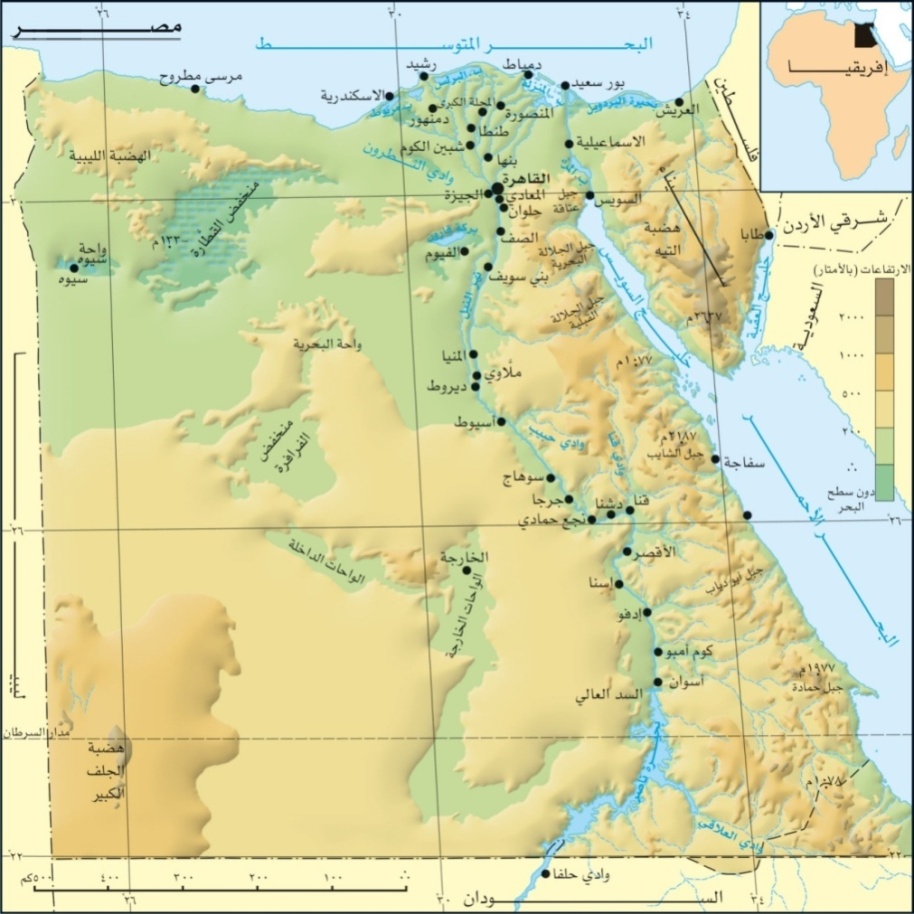
Fayoum is one of Egypt’s governorates, with its capital city being Fayoum City. It represents the largest natural oasis in Egypt. The governorate is located in the North Upper Egypt region, which includes three governorates: Fayoum, Beni Suef, and Minya. It lies between the governorates of Middle Egypt (Giza, Beni Suef, and Minya). The desert surrounds the governorate on all sides except for its southeastern border with Beni Suef Governorate. Fayoum is famous for its many natural sites, most notably Lake Qarun Reserve, Wadi El-Rayan Reserve, and Wadi El-Hitan (Valley of the Whales), a UNESCO World Heritage Site. In addition to its moderate climate and proximity to the Egyptian capital, Cairo, Fayoum also boasts a diverse collection of Pharaonic, Roman, Coptic, and Islamic antiquities, making it a major tourist destination in Egypt.
Qarun Reserve:
The reserve administratively falls under the Yusuf Al-Siddiq district. Its centerpiece is Lake Qarun, the remaining vestige of the ancient Lake Moeris, which was once a rich fishing center and is therefore considered one of the oldest natural lakes. Herodotus described an artificial lake, dug by human hands during the reign of King Amenhotep, with an area of approximately 2,800 square kilometers—more than a hundred times the size of present-day Lake Qarun. It was also much deeper, and two pyramids stood in its center, submerged halfway during the Nile floods. This lake teemed with fishermen who paid a tax on their catch to the pharaoh’s treasury. Lake Qarun is now an inland lake, not connected to the sea, and covers an area of approximately 250 square kilometers, equivalent to 55,000 acres.
The lake’s waters were once fresh and its fisheries thriving until recently. However, its Nile fish population declined due to the loss of fresh, fertilized floodwaters, increased evaporation rates, and the accumulation of untreated wastewater salts, leading to high salinity. As a result, its environment became more like a marine one, leading to the extinction of Nile fish species such as catfish, eels, barbel, tilapia, and Nile perch, with the exception of the green tilapia, which has a high capacity for adapting to salinity. Mullet and tilapia have flourished, with millions of their fry being introduced to the lake annually. Plaice, sea bream fry, sea bass, and some crustaceans (shrimp) have also adapted and successfully been raised in the lake. The introduction of marine fish fry has also resulted in the proliferation of other plant and animal life native to the Mediterranean, some of which serve as food for the lake’s fish. Among these organisms is a red algae of the species Polysifonia.
Lake Qarun was declared a nature reserve by Prime Ministerial Decree No. 943 of 1989, amended by Decree No. 2954 of 1997, covering a total area of approximately 1,385 km². The northern part of the lake includes the Qatrani Mountain area, renowned for its marine, riverine, and continental fossil deposits dating back approximately 40 million years. These deposits contain mammalian fossils between 3 and 10 million years old, including the oldest known ape, Aegyptothecus, and Arsinoitherium (an ancient Fayoum animal resembling a rhinoceros but differing in having four horns extending from the skull instead of two horns from the dermis). The area also contains fossils of ancestors of hippos, dolphins, sharks, birds, and some petrified trees.
The area is also home to fossils of ancestors of hippos, dolphins, sharks, birds, and some petrified trees. There are also some geological formations in the northeast of the lake and several marshes that support diverse plant life, attracting many migratory and resident birds during the winter. The area of Batn al-Baqara (Cow’s Belly) is located in the middle of the northern shore, and Golden Horn Island is situated in the center of the lake, where at least 20,000 gulls gather annually. The island also contains seven whale skeletons, as well as populations of wild pigeons, Egyptian spiny-tailed lizards, monitor lizards, and other species. Several archaeological sites are located along the lake’s shores, including the Churches area, the Qasr al-Sagha Temple, the Ahrabet area, the Abu Lifa Monastery, and some prehistoric remains. In northern Qarun lie the ancient Pharaonic quarries known as “Wadan al-Faras,” comprised of several interconnected archaeological units and considered among the oldest quarries.
The southern coast is characterized by its agricultural environment, tourism, and fishing activities. It includes areas containing historical sites such as the Qasr Qarun Temple, Philadelphia, and Watfa. There are also tourist facilities built around the lake’s shores, as well as villages whose inhabitants work in fishing and some nomadic Bedouin who herd sheep and camels in the area.
Wadi El-Rayan: This is a deep depression in the Eocene limestone. The reserve is located approximately 170 km southwest of Cairo, in the Fayoum Depression, and administratively belongs to the Yusuf al-Siddiq district. Its total area is estimated at 1759 km², and the valley lies about 42 meters below sea level. The valley is famous for its numerous waterfalls and natural beauty, serving as a natural habitat for wildlife and rare migratory birds. Wadi El Rayan was declared a nature reserve by Prime Ministerial Decree No. 943 of 1989, amended by Decree No. 2954 of 1997, with the aim of protecting the area’s unique biological and geological resources.
The two lakes in Wadi El Rayan began to form in 1973 when the desert depression in the valley was flooded with excess agricultural drainage water. The upper lake, covering approximately 55 km², and the lower lake, covering approximately 58 km², were formed. Reed thickets grew around their shores, providing a natural, tranquil, and pollution-free environment. The famous Wadi El Rayan waterfalls connect the two lakes.
The reserve is divided into three protected zones: a natural protection zone encompassing the southern part of the valley, covering approximately 160 km², characterized by vegetation including various types of wild plants such as tamarisk, camelthorn, desert sedge, reeds, and palm trees. Hunting of all kinds is prohibited in this zone, as are any activities that could damage or alter the natural environment, such as grazing, cutting down plants, or any other activities. A neutral zone, located north of the first zone to the east and west, covering approximately 25 km² and containing the Al-Mudawwara rock formation. Hunting of all kinds is prohibited in this zone. A tourism development zone, encompassing the northern and northeastern parts of the valley, covers 125 km².
The valley includes several important areas: the waterfalls area connecting the two lakes; the Ain El Rayan area, also known as “Ain El Awan Oasis,” located in the southwest of the reserve and covering approximately 23 km², consisting of dense, shifting sand dunes and containing four natural sulfur springs; 16 species of desert plants; and nearby, date palms, sedges, and wild hyacinth. It is also home to about 15 animal species, most notably the Egyptian gazelle, sand gazelle, sand fox, red fox, and Egyptian wolf, as well as about 16 species of resident and migratory birds. The Jabal El Rayan area, also known as “Manaqir El Rayan,” surrounds the southern and southwestern parts of the Ain El Rayan area and is home to various migratory and resident birds, most notably the peregrine falcon and the saker falcon. It also contains marine fossils and some archaeological remains. The Jabal El Mudawara area is located near the lower lake and features a mountain between two springs. The limestone rocks of Jabal El Mudawara contain various fossils of marine organisms from the Middle Eocene epoch. Whales
Wadi Al-Hitan (Valley of the Whales): wadi Al-Hitan, also known as “Hell’s Neighbor,” is located in the northwest of Wadi El-Rayan Protected Area. It contains fossilized remains dating back approximately 40 million years, including skeletons of primitive whales, shark teeth, shells, and other extinct marine animals. The valley is considered an open-air museum, and these fossilized remains represent one of the most significant stages in the evolution of whales from terrestrial to marine mammals. It is the largest site in the world that bears witness to this stage of evolution, reflecting the nature and life of whales during this period of transformation. In July 2005, UNESCO, at a meeting of the World Heritage Committee hosted by Durban, South Africa, decided to inscribe the area on its list of natural reserves, making it the first Egyptian natural site to be registered as a World Heritage Site. This recognition was due to the valley’s contribution to scientists’ understanding of the evolutionary stages of this mammal.
Wadi Al-Hitan is also known as “The Valley of the Whales,” and its fossilized remains represent one of the most important stages in the evolutionary history of whales. On January 14, 2016, the Fossils and Climate Change Museum was inaugurated in Wadi El-Hitan (Valley of the Whales). Established by the United Nations Development Programme (UNDP) in collaboration with the Egyptian government and with support from the Italian government, the museum is part of a series of initiatives to promote the conservation of natural reserves and encourage ecotourism. The museum showcases the Basilosaurus isis, the largest fossilized whale ever found, along with a unique collection of vertebrate fossils of scientific value to the region. These fossils illustrate the transformation of Wadi El-Hitan from sea to desert over millions of years due to climate change. The museum is the first of its kind in the Middle East and features an architectural design that blends seamlessly with the natural environment.