Ads space
Siwa Oasis
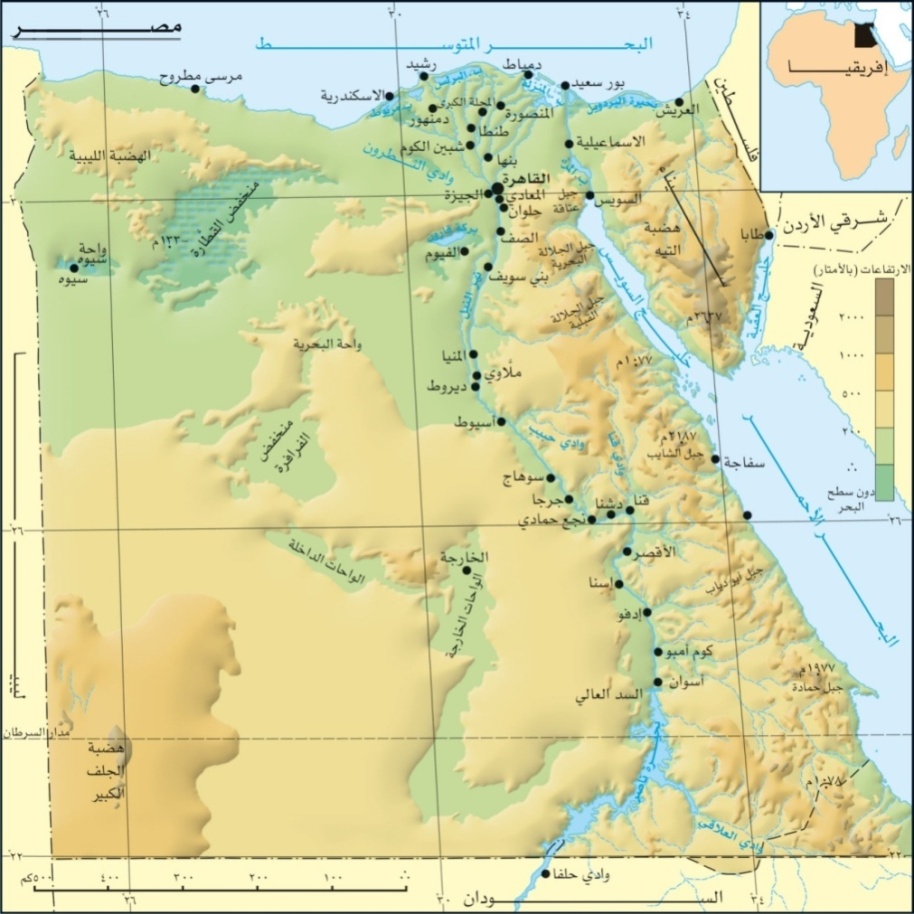
an Egyptian city and oasis in the Western Desert, located approximately 300 km southwest of Marsa Matrouh on the Mediterranean coast. Administratively, it belongs to the Matrouh Governorate. Wells and springs are scattered throughout the oasis, used for irrigation, drinking water, bottling natural water, and therapeutic purposes. It also boasts four large lakes. Several archaeological sites have been discovered there, including the Temple of Amun, which experiences the spring equinox twice a year, and the tombs of the Mountain of the Dead. A nature reserve covering 7,800 square kilometers has been declared, encompassing a diverse array of animal and plant life.
The oasis is home to approximately 35,000 people, most of whom work in agriculture or tourism. The oasis has a continental desert climate, characterized by very hot summers and warm days and very cold nights in winter.
Siwa is renowned for its therapeutic tourism, as its sands contain natural elements beneficial for alternative medicine. Safari trips using four-wheel drive vehicles are also popular excursions for visitors to the oasis. Some statistics indicate that Siwa receives approximately 30,000 tourists annually, both Egyptian and foreign.
Several foreign and Arab websites have ranked it among the nine most isolated places on Earth. Siwa’s architecture is unique and distinctive, with traditional houses built from kershif stone, a mixture of salt, fine sand, and clay. Doors and windows are crafted from olive and palm wood. Embroidery and pottery are among the oasis’s most prominent traditional crafts, most notably the tagine, a traditional pyramid-shaped desert cooking vessel, beautifully decorated. The people of Siwa have a special festival, the Harvest Festival, which they celebrate when the moon is full. Despite Siwa’s location in the heart of the desert, fresh water is abundant in the form of numerous wells and springs, reaching up to 200 springs. These springs flow with 190,000 cubic meters of water daily, used for irrigation, drinking, bottling natural water, and therapeutic purposes. The water volume varies from one well to another, and sometimes it pools in a single area. The water can be hot, cold, sweet, or salty, in addition to sulfur springs. Among these springs are Ain Tajzart, Ain al-Dakrur, Ain Qurisht, Ain al-Hamam, Ain Tamusa, Ain Khamisa, Ain al-Jarba, Ain al-Shifa, and Ain Mashandat. One of the most famous is Cleopatra’s Spring, also known as Ain Guba or Ain al-Shams (Spring of the Sun). It is a stone bath filled with water from natural hot springs. Some claim it was named after the Egyptian queen who bathed in it during a visit to Siwa, while others deny that such a visit ever took place.
Ain Fatnas: Located approximately 6 km west of Siwa, on Fatnas Island overlooking the salt lake, surrounded by palm trees and desert landscapes.
Ain Wahid: Also known as the “Great Sand Sea Well,” this is a hot sulfur spring located 10 km from the oasis, near the Libyan border, in the heart of the Great Sand Sea.
Ain Keighar: Siwa is home to numerous springs used for therapeutic purposes, particularly for rheumatic and psoriasis-related ailments. Ain Keighar is the most famous, with a water temperature of 67°C and containing various minerals and sulfur compounds.
- Saltwater Lakes
- Lake Fatnas
- Lake Shiata
- Lake Siwa
Lake Siwa has four main lakes: Lake Zeitoun, east of Siwa, covering 5,760 acres; Lake Aghurmi (or Al-Ma’aser), northeast of the oasis, covering 960 acres; Lake Siwa, west of Shali, covering 3,600 acres; and Lake Al-Maraqi, west of the oasis in the Bahy El-Din area, covering 700 acres. The oasis also includes several other lakes, such as Lake Taghaghin, Lake Al-Awsat, and Lake Shiata. Lake Fatnas is a popular tourist destination, located 5 km west of Siwa. Fatnas Island is surrounded by the lake on three sides, and Mount Jafar lies in front of it.
Siwa Protected Area: The protected area covers 7,800 square kilometers. It is divided into three sectors: the eastern sector, covering approximately 6,000 square kilometers; the western sector, covering approximately 1,700 square kilometers; and the central-southern sector, covering approximately 100 square kilometers. The area has been designated a nature reserve due to its rich biodiversity and natural and cultural heritage. It is home to numerous mammals, reptiles, birds, invertebrates, and insects, including the endangered slender-horned gazelle, the phoenix fox, the cheetah, and endangered wildcats. Common bird species such as pigeons and migratory birds also frequent the area, along with a variety of plant life.
- Mountain of the Dead.
- Tomb of Bathut.
- Tomb of Si-Amun.
- Tomb of the Crocodile.
Mountain of the Dead: This mountain contains a collection of ancient tombs dating from the 4th to 3rd centuries BC, which were reused during the Greek and Roman periods. The mountain is located about 2 km from Siwa, and the tombs were discovered there as a result of the Siwa residents fleeing to the mountain during World War II air raids.
The Tomb of Batuth: This is the tomb of a priest of the god Osiris, who held the title of Great in the City of the Just and Righteous. The tomb contains a carving of a hymn to the god Thoth, as well as a scene depicting a religious ritual known as the Four Bulls.
The Tomb of Si-Amun:
This is one of the most important archaeological tombs in the Western Desert, containing a large number of mummies. The tomb’s significance lies in its illustration of the fusion between ancient Egyptian and Greek art. Among the most important artistic depictions are a scene of the judgment hall of Osiris and a scene of the goddess Nut, the sky goddess.
The Crocodile Tomb: This is one of the most important archaeological tombs carved into the Mountain of the Dead. It was discovered in 1940 and became known by this name due to the loss of the tomb owner’s name and the Siwa residents’ fascination with the crocodile depicted in the tomb. The tomb is filled with scenes from the Book of the Dead, and other scenes of the tomb owner worshipping some gods. On the side of the entrance are images of three gods holding knives, for the purpose of protecting the mummy.
The Tomb of Batuth: This is the tomb of a priest of the god Osiris, who held the title of Great in the City of the Just and Righteous. The tomb contains a carving of a hymn to the god Thoth, as well as a scene depicting a religious ritual known as the Four Bulls.
The Tomb of Si-Amun: This is one of the most important archaeological tombs in the Western Desert, containing a large number of mummies. The tomb’s significance lies in its illustration of the fusion between ancient Egyptian and Greek art. Among the most important artistic depictions are a scene of the judgment hall of Osiris and a scene of the goddess Nut, the sky goddess.
The Crocodile Tomb: This is one of the most important archaeological tombs carved into the Mountain of the Dead. Discovered in 1940, it became known by this name due to the loss of the tomb owner’s name and the fascination of the people of Siwa with the crocodile motif found within the tomb. The tomb is rich with scenes from the Book of the Dead and others depicting the tomb owner worshipping various deities. On either side of the entrance are images of three gods holding knives, presumably to protect the mummy.
The Tomb of Misu-Isis: This is one of the archaeological tombs in the area. It contains an inscription describing the god Osiris as the Great and Venerable God of That. Archaeologists believe that “That” was the ancient name for Siwa.
- Gebel Dakrour.
- The Temple of Amun (Temple of the Oracle).
- The remaining wall of the Temple of Amun at Umm Ubayda.
Gebel Dakrour: This is a series of adjacent hills. The mountain is located 3 km south of the Siwa Oasis and has two peaks called Nadra and Nasra. At the peak of Nasra is a cave carved into the rock called Tanashur, and below it is a structure called Beit al-Sultan (House of the Sultan), made of clean limestone. The mountain is famous for its hot sands, believed to have therapeutic properties, and for containing the red pigment used in the manufacture of Siwa pottery. Visitors from Egypt and abroad flock to the mountain during the summer to enjoy the hot sand baths, renowned for their therapeutic properties for rheumatic diseases, joint and spinal pain, and skin conditions.
Temple of Amun: The Temple of Amun, also known as the Temple of the Oracle, the Temple of Prophecies, or the Temple of Alexander, is one of the most important archaeological sites in the Siwa Oasis. It was built during the Pharaonic era to spread the worship of Amun among the surrounding tribes and peoples, given Siwa’s strategic location as a crossroads of trade routes between the southern, northern, western, and eastern parts of the Sahara. The temple is located 4 km east of Siwa city and is famous for the visit of the Macedonian leader Alexander the Great after his conquest of Egypt in 331 BC.
The spring equinox occurs on September 22nd or 23rd, marking the only day of the year when day and night are of equal length. This occurs 90 days after the shortest day of the year and 90 days after the longest day.
Umm Ubayda Temple:
The Umm Ubayda Temple is the second Amun Temple in the oasis and is located near the Temple of the Oracle. It was built by the Egyptian Pharaoh Nectanebo II or Nectanebo II of the Thirtieth Dynasty, and it features an image of the Pharaoh kneeling to the god Amun. Accounts differ regarding how the temple was destroyed. Some suggest that an earthquake in 1881 caused its destruction, while others claim it was blown up in 1897 by Mahmoud Azmi, the governor of Siwa, who had been transferred to Siwa after the Urabi Revolt due to his sympathy for the movement. Shali Fortress
Remains of Shali City: The city of Shali was founded in 1203. Its name means “city” in the Siwi language. The city originally had only one gate, called “Anshal,” meaning “city gate,” for defensive purposes. The old mosque was located on the northern side of the city wall. A second gate, called “Atrat,” meaning “new gate,” was opened on the southern side. This gate was used by those who preferred to avoid passing in front of the “Ajwad,” the heads of families. Only the people of Siwa knew the location of this gate and used it secretly to enter or leave the city during a siege. Because Siwi customs restricted women’s movement to the most limited circumstances and prevented them from mixing with men, a third gate was opened. “Qadouha,” and women were only permitted to use this gate when leaving.
The city’s houses were built using kershif clay, extracted from salt-saturated earth, because when it dries, it becomes as hard as cement.
In 1820, Muhammad Ali Pasha’s forces conquered Siwa and brought it under government control. The city enjoyed security and protection, and in 1826, the council of elders permitted the inhabitants to build their homes outside the city walls. In 1926, a large number of the city’s houses collapsed, and the rest were damaged due to heavy rains. The residents abandoned Shali and built new houses on the mountaintop.
- The Shrine of Sidi Suleiman.
- The Siwa Heritage Documentation Center.
- The Siwa House Museum.
The Shrine of Sidi Suleiman:
Sidi Suleiman is the imam of the Siwa people and the most famous figure in the oasis. The people of the oasis tell of Sidi Suleiman as a judge of great piety and devotion. It is said that long ago, he gathered the people of the oasis in the mosque and prayed with them to God to repel an attack by a raiding party. The party never arrived, losing its way and becoming lost in the desert. It is also said that one day, overcome by intense thirst, he struck the ground with his staff, and a spring of water gushed forth. It is said that his mother, before giving birth to him, loved fish, and a dove landed on her window and left her a fish. This is the origin of the custom still prevalent in Siwa today, where the mother of a newborn eats fish, especially if the child is a boy.
Siwa Heritage Documentation Center: This center is affiliated with the Center for Documentation of Cultural and Natural Heritage, which is part of the Library of Alexandria and supported by the Ministry of Communications and Information Technology. The center aims to document all aspects of Siwa’s heritage, including customs, traditions, crafts, handicrafts, ancient art, music, poetry, sculpture, nature reserves, and ancient irrigation and building methods. The center collaborates with several entities, including the Siwa City Council, the Local Community Development Association, the Sons of Siwa Association, the Siwa Antiquities Directorate, the Italian Cospe Development Foundation, the Bougaz Association in Tangier, Morocco, and the European Union’s Euro-Mediterranean Heritage Programme.